The 2026 Guide to Mantled Howler Monkeys in Costa Rica | Where to Find Them
Long before you see a Mantled Howler Monkey in the Costa Rican jungle, you will hear it. Known locally as the Mono Congo, their guttural, echoing roars can travel for miles through the dense canopy, creating the ultimate soundtrack for any Central Pacific rainforest adventure.
Mantled Howler Monkey Quick Facts
| Attribute | Details |
|---|---|
| Scientific Name | Alouatta palliata |
| Diet | Herbivore / Folivore (Primarily canopy leaves, with occasional fruits and flowers) |
| Conservation Status | Vulnerable (Globally), but populations are protected in Costa Rican reserves |
| Best Time to Spot | Dawn (5:30 AM - 7:00 AM) and dusk, when their territorial calls are most active |
Where to Find Howler Monkeys in Costa Rica
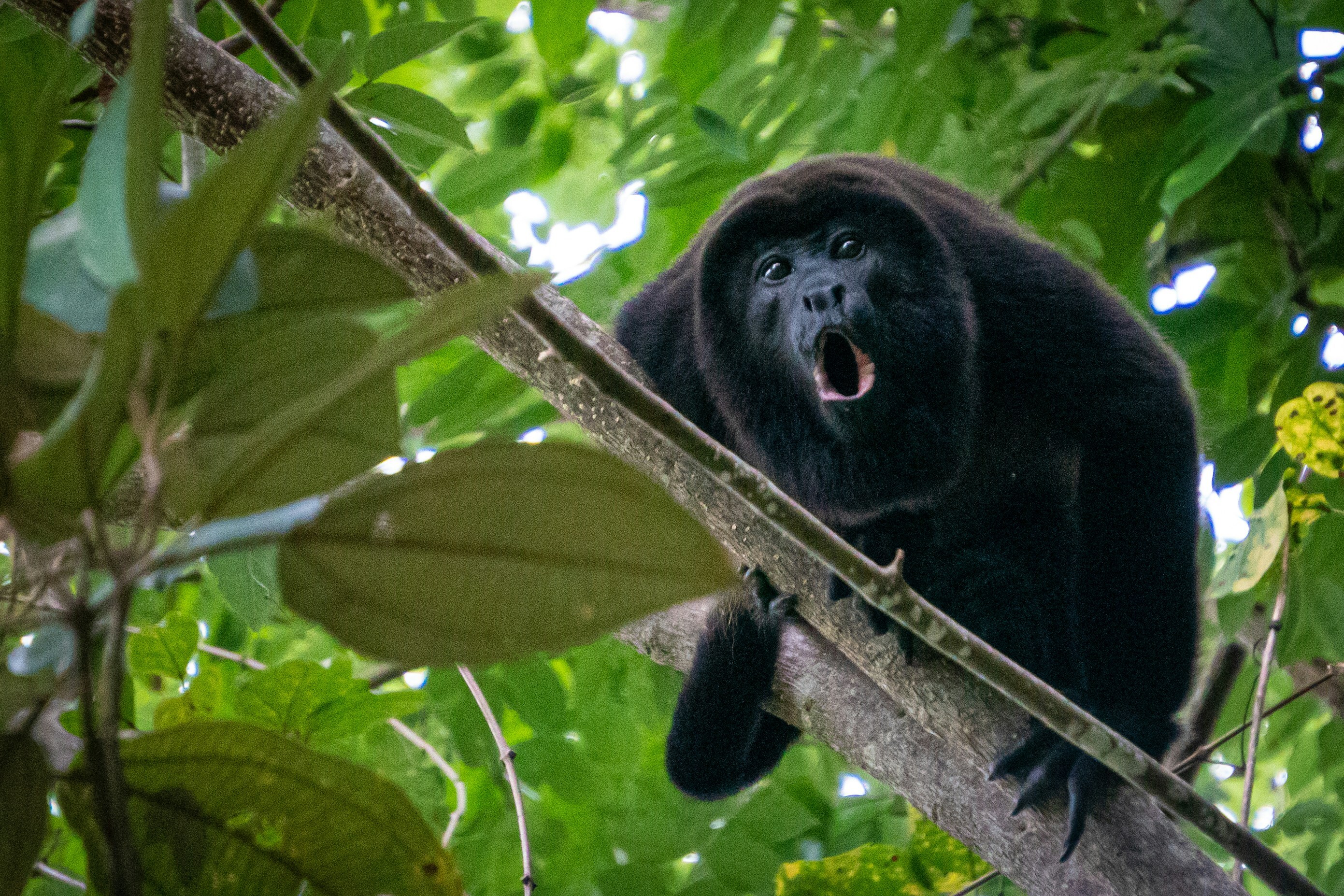
If you are wondering where to see howler monkeys in Costa Rica, look directly up into the tallest trees of the Central Pacific. Unlike the more ground-dwelling species, Mono Congos rarely descend from the upper canopy of the rainforest.
The lush, primary rainforests surrounding Jacó and Los Sueños offer perfect habitats. They are deeply concentrated in the protected biological corridors of Carara National Park and the towering canopy surrounding the beaches of Manuel Antonio.
Behavior & Fun Facts
The Mono Congo Costa Rica population exhibits some of the most fascinating evolutionary traits in the primate world:
- Fact 1: The Jurassic Roar. Their famous howl can be heard up to 3 miles away. It is so deep and intimidating that sound engineers recorded howler monkeys to create the dinosaur roars in the movie Jurassic Park.
- Fact 2: Built-in safety harness. They possess incredibly strong prehensile tails with a hairless, tactile pad at the tip. They use this tail as a fifth limb, capable of supporting their entire body weight while feeding.
- Fact 3: They are the ultimate chillers. Because their leaf-heavy diet is notoriously hard to digest and provides very few calories, howler monkeys spend nearly 80% of their day sleeping or resting completely motionless in the branches.
Best Tours to See Howler Monkeys in the Wild
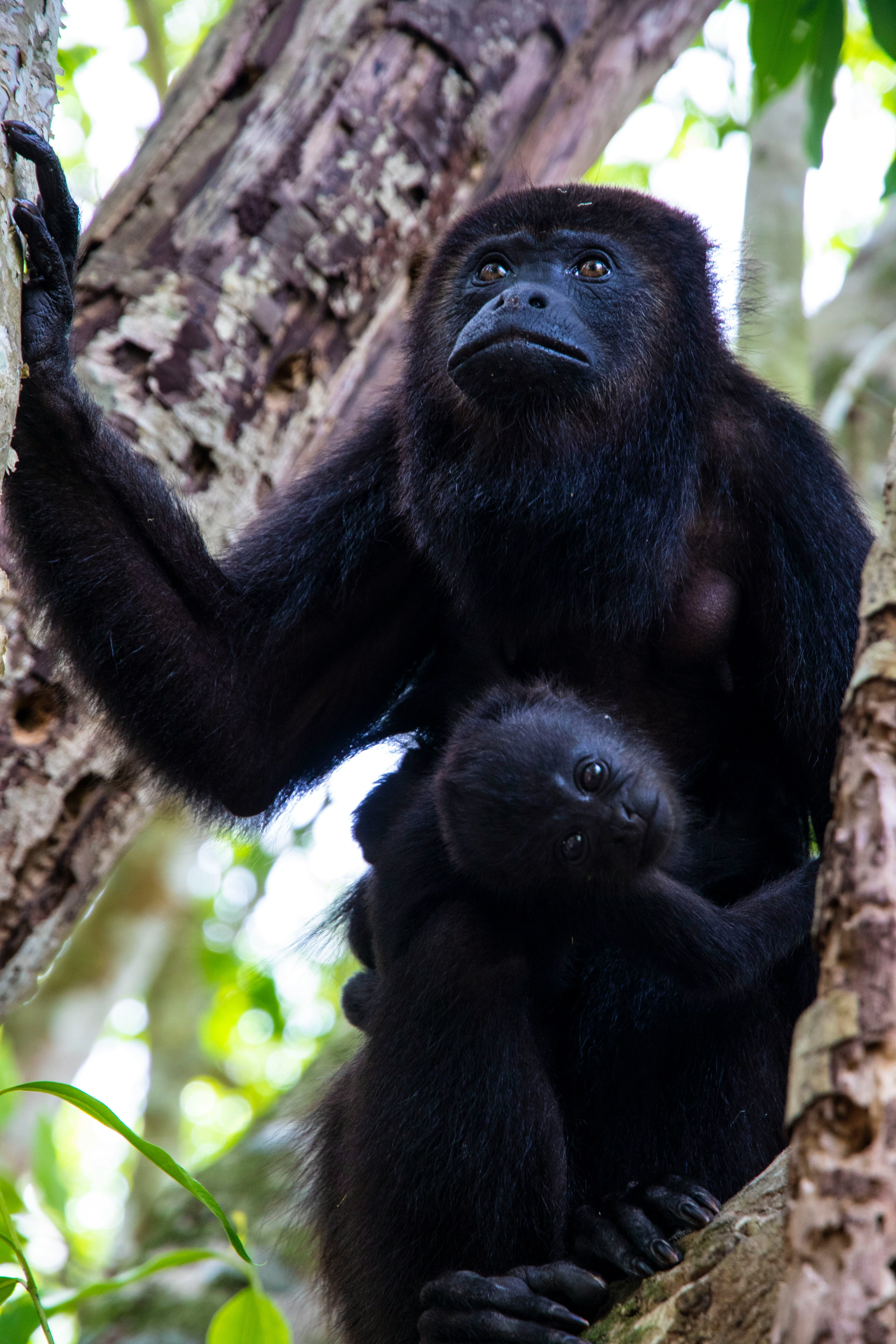
Because they stay so high in the trees and are inactive for most of the day, spotting them without professional equipment can be incredibly difficult. Booking dedicated Costa Rica monkey tours with a certified naturalist ensures you won't walk right past them.
To experience the sheer volume of their morning calls, our VIP Manuel Antonio Park Private Walk is highly recommended, as our guides know exactly which canopy trails the troops frequent. Alternatively, taking the Monkey Mangrove Tour provides a serene, guided boat ride where you can spot them resting in the towering mangrove trees from a comfortable vantage point.
Ethical Tourism Guarantee: Adventure Tours Costa Rica strictly enforces a "no feeding and no calling" policy. Attempting to mimic their territorial roars can cause unnecessary stress to the troops, and feeding them disrupts their delicate folivore digestive systems. We observe them peacefully and ethically.
Ready to hear the legendary call of the Mono Congo? Contact Adventure Tours Costa Rica to book your unforgettable canopy wildlife experience!
Frequently Asked Questions
Why do Howler Monkeys in Costa Rica howl so loudly?
Male howler monkeys use their incredibly loud calls to establish territory and communicate with rival troops. The sound is amplified by a specially adapted, enlarged hyoid bone in their throats.
Where is the best place to see Mantled Howler Monkeys in Costa Rica?
The Central Pacific coast is an excellent hotspot. The lush canopies of Manuel Antonio National Park, Carara National Park, and the surrounding rainforests of Jacó are prime locations for spotting them.
Are Howler Monkeys dangerous to humans?
No, they are not dangerous. Howler monkeys spend almost their entire lives high up in the forest canopy and are generally slow-moving and peaceful. However, maintaining a respectful distance is always required.
What do Mantled Howler Monkeys eat?
They are primarily folivores, meaning their diet consists mostly of canopy leaves. Because leaves provide very little energy, they spend up to 80% of their day resting and digesting.
